Ninefold: A Distributed Resonant Field
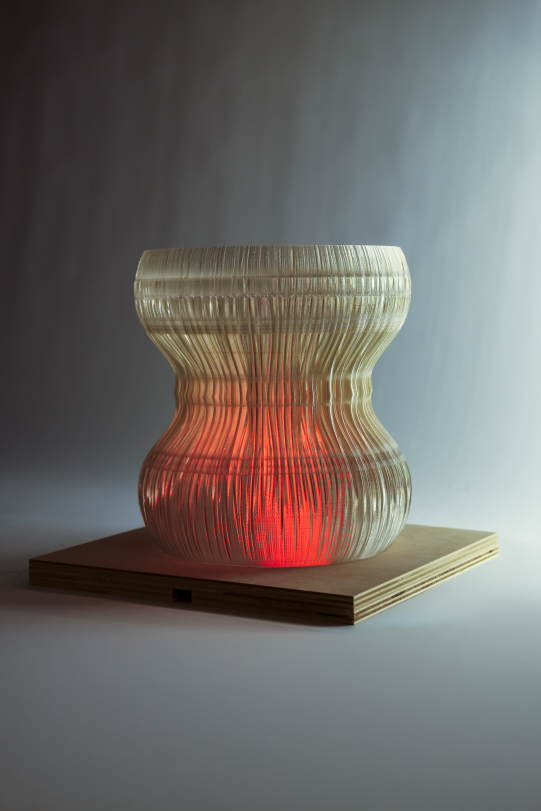
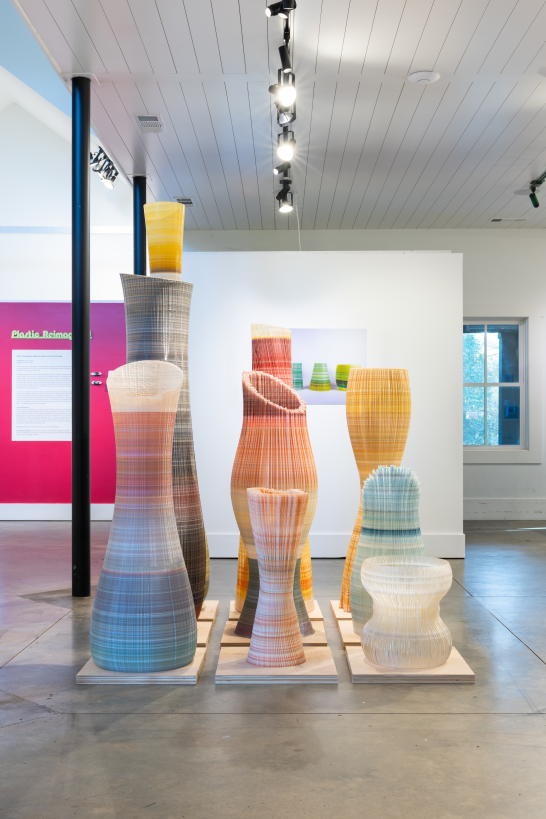
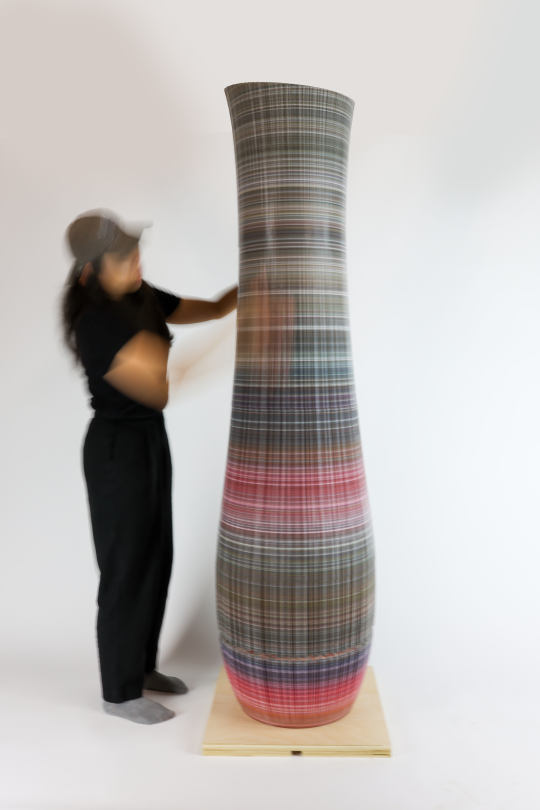
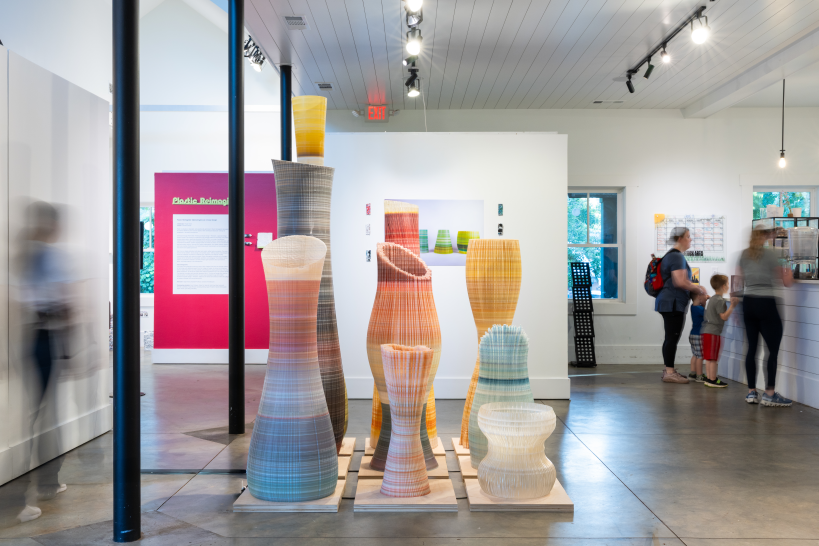
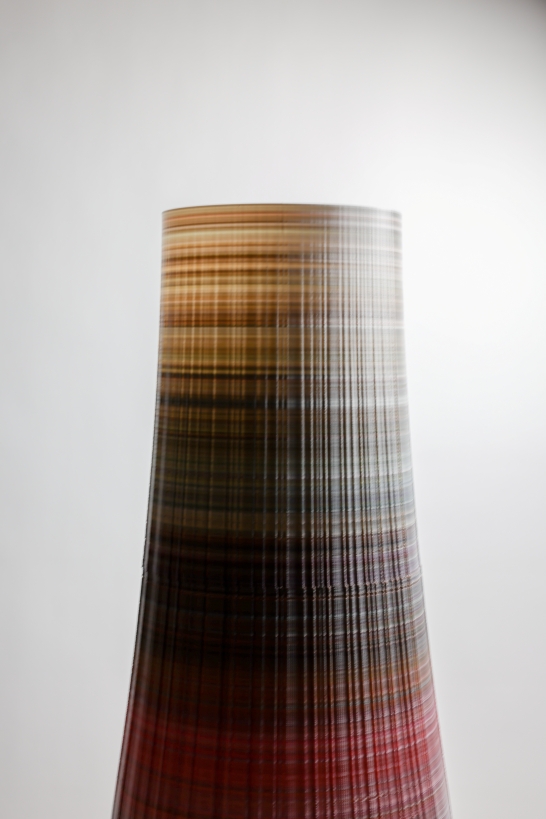
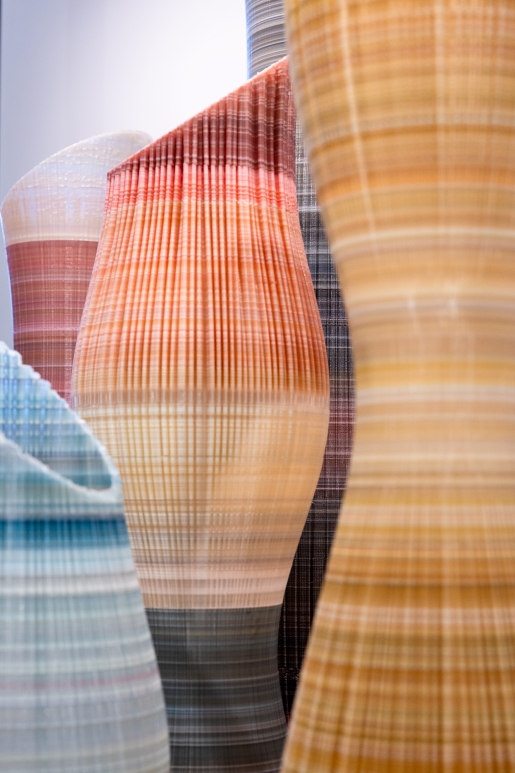
Ninefold is a project with Architecture colleagues, Hyojin Kwon and Misri Patel. Inspired by the Edgard Varèse, Le Corbusier and Iannis Xenakis’ collaboration, this project is also a collaboration with architecture and sound design in an anthropogenic context. Ninefold is a multimedia installation using 3D printed recycled plastics as the material, and a distributed sound network exploring acoustic phenomena of space and geometries. A harmonic spectrum of nine interdependent overtones ranging 50–1800 Hz generates evolving combinatorial polyrhythmic textures that converge and disperse across space. Hyojin and Misri fabricated the printed sculptures using recycled plastics and forms generated with recursive reaction-diffusion systems. There will be a few research papers forthcoming on this work and I will link to them here. Below is mostly a description of my contribution of the sound cycle, design and networking. Ninefold is currently an exhibit at the Woodstock Arts Reeves House: https://woodstockarts.org/events/exhibition-plastic-reimagined-material-agency-circular-design/
Networking
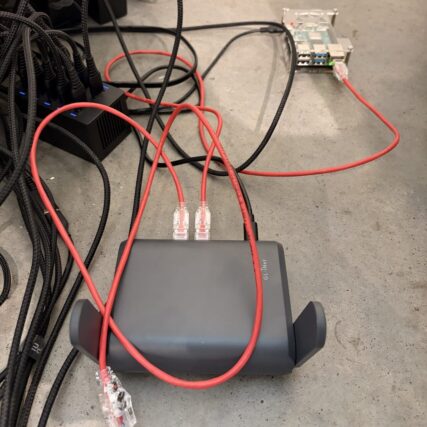
Ninefold is installed in a 3×3 grid with each plastic artifact containing a networked mobile device. I use a Raspberry Pi as the Node.js server and a small router for all devices to connect to a local network. The generated audio is created using the Web Audio API through the browser.
Melody
Ninefold uses a 60-minute sound cycle that explores variations in texture, polyrhythms, and acoustic phenomena. It uses a 34-note self-replicating and palindromic melody:
0 1 2 3 4 3 5 6 2 7 5 6 8 1 8 7 4 0 4 7 8 1 8 6 5 7 2 6 5 3 4 3 2 1
These numbers are assigned to specific harmonics that the artifacts are specifically designed to resonate. This melody self replicates at 13:1 and 21:1, which means that you can hear it at two different speeds and will always coincide with moments replicating this exact melody in a “meta” tempo. See the visualization below for this idea, red represents the 21:1 speed and cyan represents the 13:1 speed. Overlaps are shown in black and the meta-melody is emphasized with an outline. In Ninefold this is the main idea used throughout the 60-minute sound cycle with variations on the sounds using sustains and pulses. I was particularly drawn to this 34-note melody because of this fascinating connection to the Fibonacci sequence that appears to be a property embedded in this melody. The Fibonacci sequence works by adding the previous two numbers of the sequence to get the next number: 0, 1, 1, 2, 3, 5, 8, 13, 21, 34, … Therefore, having the 21:13 ratios exist within a 34-note melody was a compelling phenomenon to explore for this work.

Harmonics
The fundamental harmonics are:50 Hz, 100 Hz, 150 Hz, 200 Hz, 300 Hz, 450 Hz, 600 Hz, 900 Hz, 1800 Hz
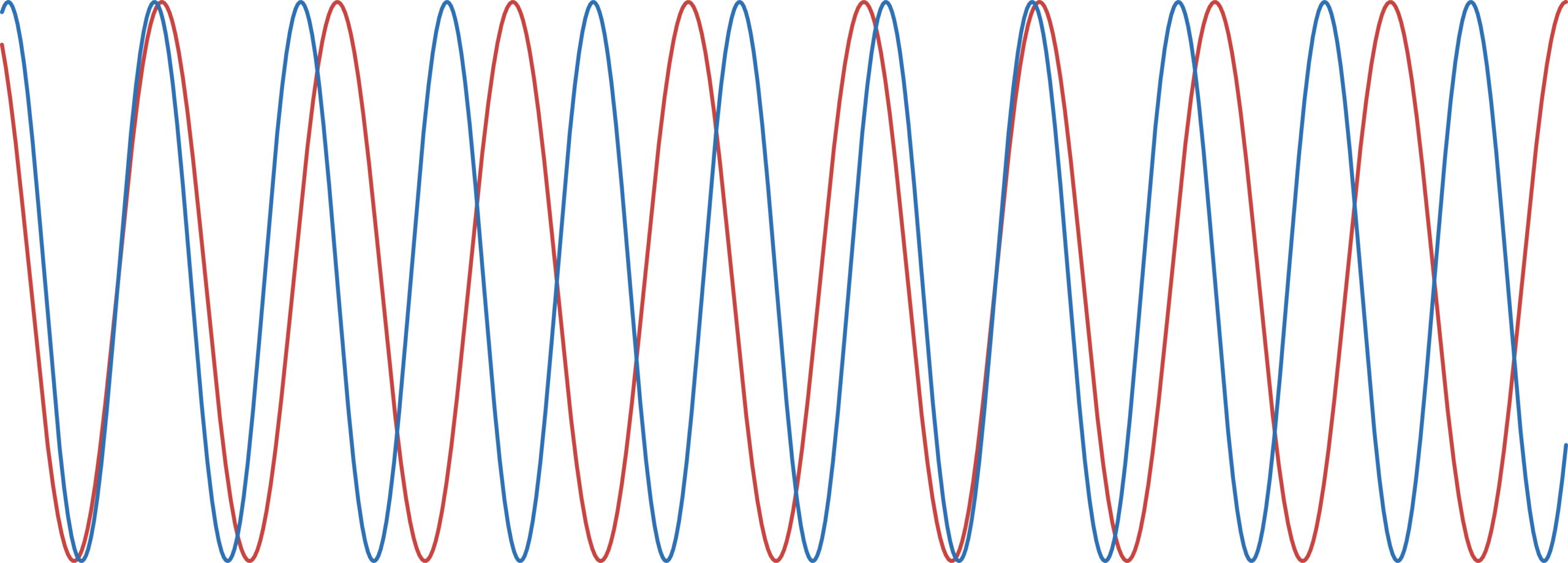
There are moments when some tablets will have a small detuning offset from one of these harmonics. This detuning is very slight and can create a pulsing phenomenon that may change as you move around the space. These pulses occur at specific speeds that correspond to their fundamental frequency multiple. The sound will evolve and your perception will never stay the same during the experience.
Waves
The waveform images below demonstrate how two sine waves are close together in frequency (only 2 Hz detuned), while the next image shows the acoustic phenomenon that our ears will perceive. This is used throughout the Ninefold cycle with various distances in the detuning offsets.

Photos from Exhibit and Fabrication

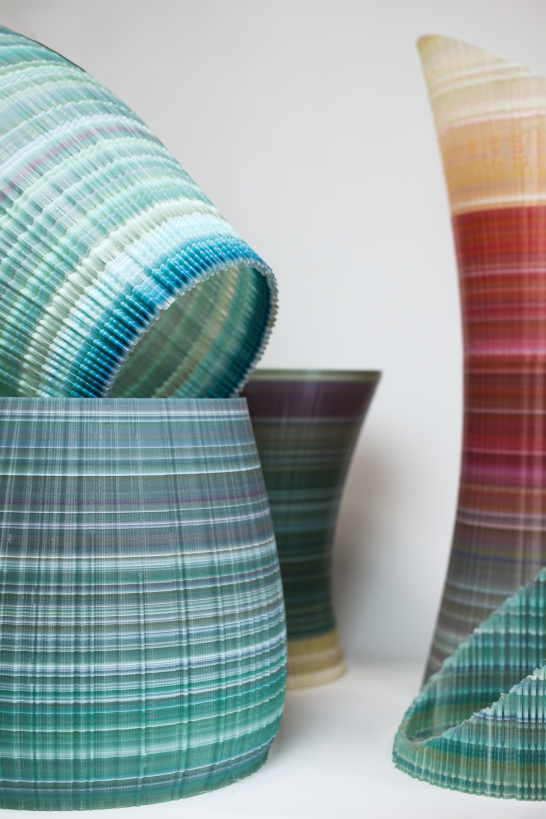
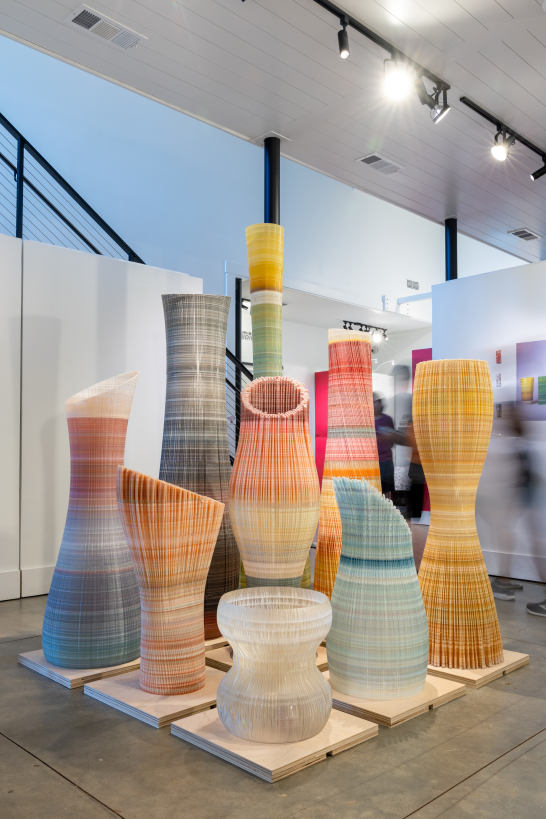
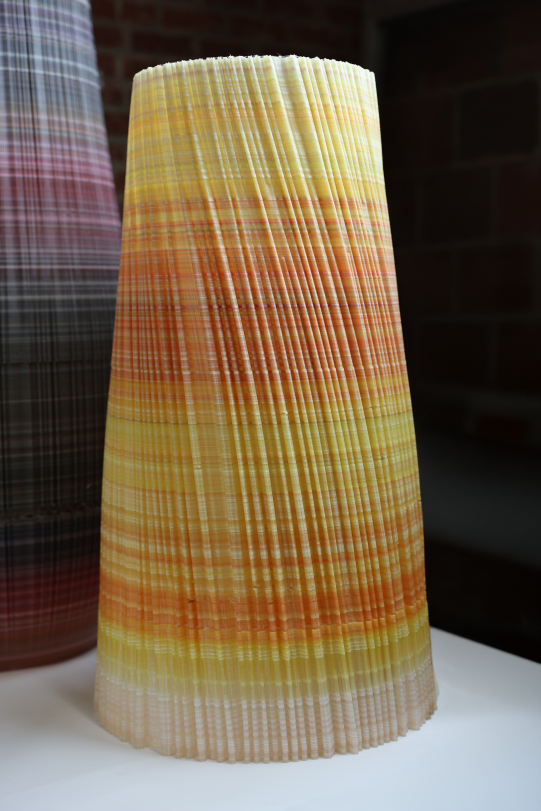
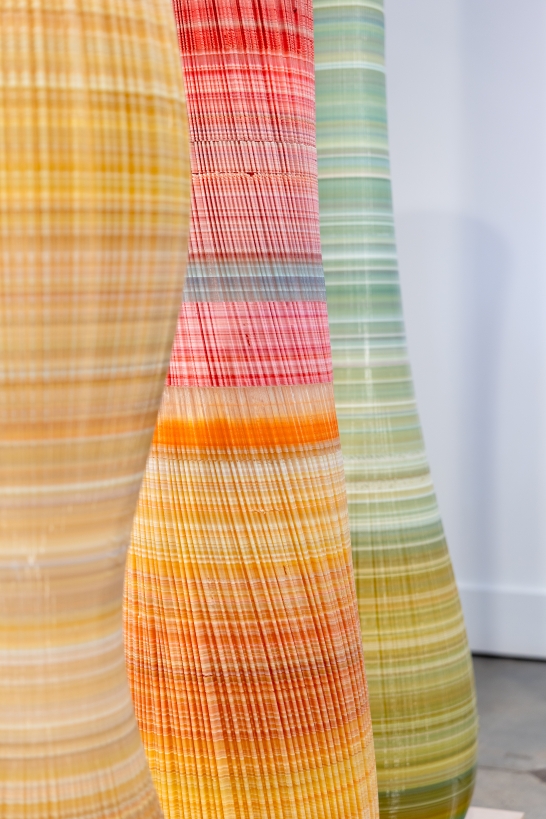
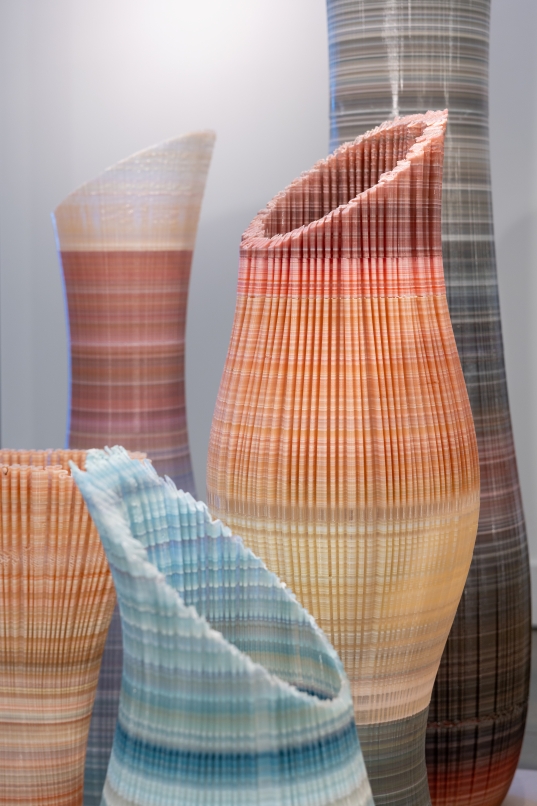
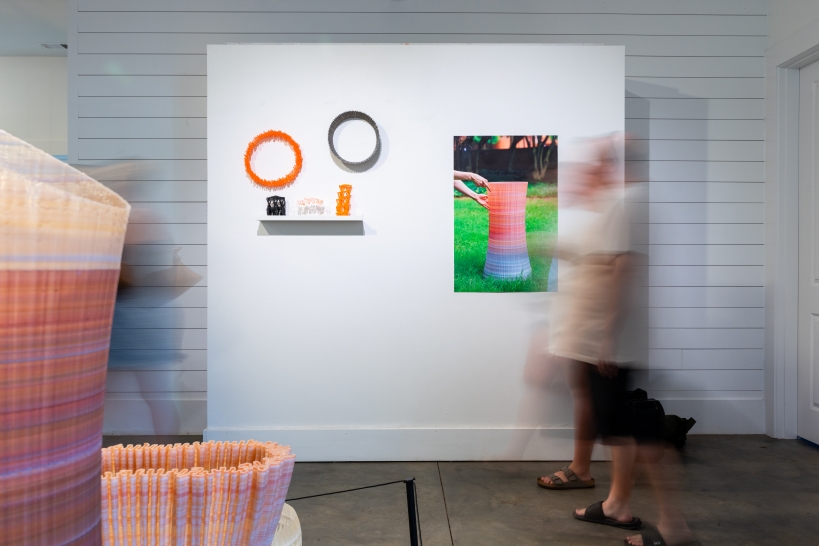
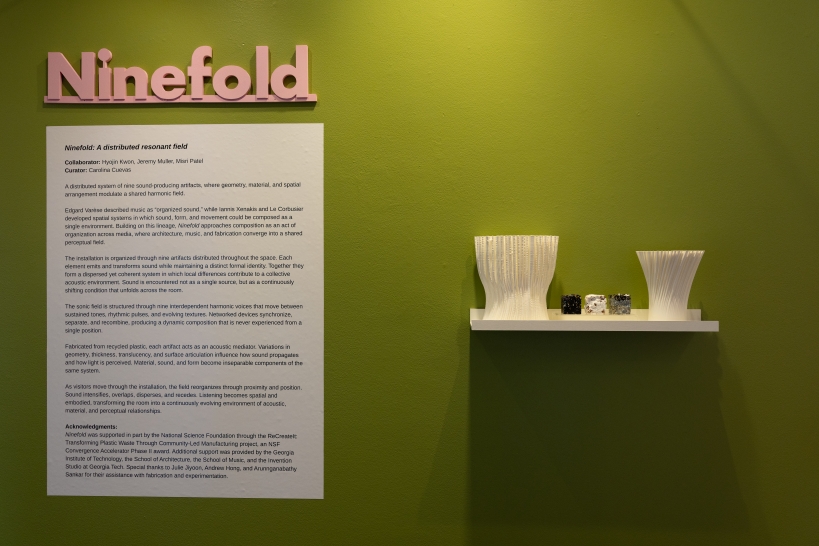
Photos by Arsh Khanna